What Are Bilingual Literacy Strategies for Multilingual Learners?
Bilingual literacy strategies are instructional approaches that support multilingual learners in developing reading, speaking, and writing skills across languages. These strategies integrate oral language and writing development, helping students build confidence, strengthen communication, and improve overall academic performance through meaningful bilingual instruction.
Introduction
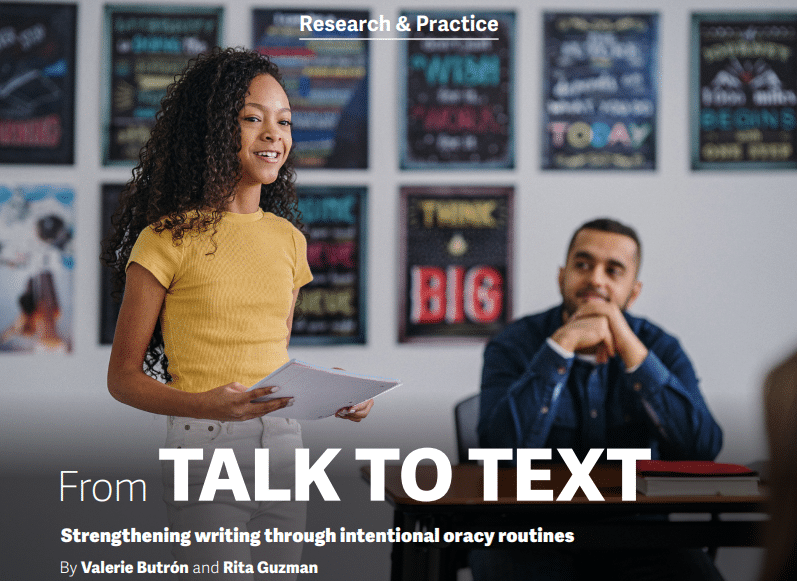
Valerie Butrón and Rita Guzmán of Tumbao Bilingual Books were recently featured in Literacy Today, a publication of the International Literacy Association (ILA). Their article highlights the critical role of oracy in strengthening writing development for multilingual learners and offers practical insights for educators working in linguistically diverse classrooms.
Why Oracy and Writing Matter for Multilingual Learners
Oracy in the classroom plays a vital role in writing development, as it allows students to organize and refine their ideas before writing. Strong bilingual instruction helps support multilingual learners writing by integrating speaking, listening, and collaboration, leading to clearer expression and improved academic outcomes.
What This Feature Highlights About Bilingual Literacy
This feature underscores a key principle of effective bilingual literacy instruction: language development is not linear, and it does not happen in isolation. Multilingual learners benefit most when they are given structured opportunities to speak, listen, read, and write in connected ways.
Butrón and Guzmán emphasize that oral language is not a precursor to writing alone, but an ongoing partner in the writing process. When students are given intentional opportunities to process ideas through discussion, rehearsal, and collaboration, their written expression becomes more precise, confident, and meaningful.
Their work reflects a broader shift in the field toward integrated literacy practices that honor the full linguistic repertoire of students while supporting academic growth.
Why Oracy Matters for Multilingual Learners
Oracy plays a central role in helping multilingual learners develop both language and content knowledge. Through structured speaking and listening routines, students are able to test ideas, build vocabulary, and make connections before transferring those ideas into writing.
Research and classroom practice continue to show that when students engage in meaningful academic talk, they are better prepared to produce clear, organized, and thoughtful written work. This is especially important for multilingual learners, who benefit from opportunities to rehearse language in low-risk, collaborative settings.
As Butrón and Guzmán note, creating space for student voice is not an add-on to instruction. It is a foundational component of equitable literacy practices that support access, engagement, and long-term academic success.
Bringing This Work to Schools and Classrooms
The practices highlighted in this feature are directly connected to the professional learning and classroom support offered through Tumbao Bilingual Books. Learn more about our professional development services to bring these strategies into your school.
Schools and districts looking to strengthen literacy outcomes for multilingual learners can benefit from practical, classroom-ready strategies that integrate oracy, reading, and writing.
Through professional development, coaching, and author visits, Butrón and Guzmán support educators in designing learning experiences that center identity, language, and meaningful participation.
This work aligns with the TUMBAO Method™, which emphasizes teaching with heart and heritage, creating opportunities for movement and expression, and using culturally grounded texts to deepen learning.
“When students have the opportunity to develop ideas through conversation, their writing becomes more intentional, clear, and confident.”
“Oracy is not separate from literacy. It is a critical pathway into it.”
“Multilingual learners thrive when their voices are positioned as assets in the classroom.”
Educators can also explore our bilingual books to support classroom instruction and student engagement.
For additional support, you can download free classroom resources designed for multilingual learners.
Schools and districts interested in bringing this work to their classrooms are invited to connect with Tumbao Bilingual Books for professional development, coaching, and author visit opportunities.
Bring These Strategies to Your School or Classroom
If you’re looking to strengthen bilingual literacy and support multilingual learners, Tumbao Bilingual Books offers practical solutions for educators. Book professional development sessions, explore bilingual books for your classroom, or access free resources to start implementing these strategies effectively.
Frequently Asked Questions
What are oracy strategies in the classroom?
Oracy strategies include structured discussions, partner talk, and collaborative speaking activities that help students develop language skills. These strategies support idea development and improve writing outcomes.
How do bilingual books support writing development?
Bilingual books provide language models and cultural relevance, helping students connect ideas across languages. This strengthens vocabulary, comprehension, and writing confidence.
How can teachers support multilingual learners in writing?
Teachers can support multilingual learners by integrating speaking activities, modeling writing, and using scaffolds like sentence frames. Encouraging discussion before writing improves clarity and organization.